
Nigeria Unveils First-Ever ‘Nigeria House’ at Davos, Shettima Highlights Food Security and Reform Gains
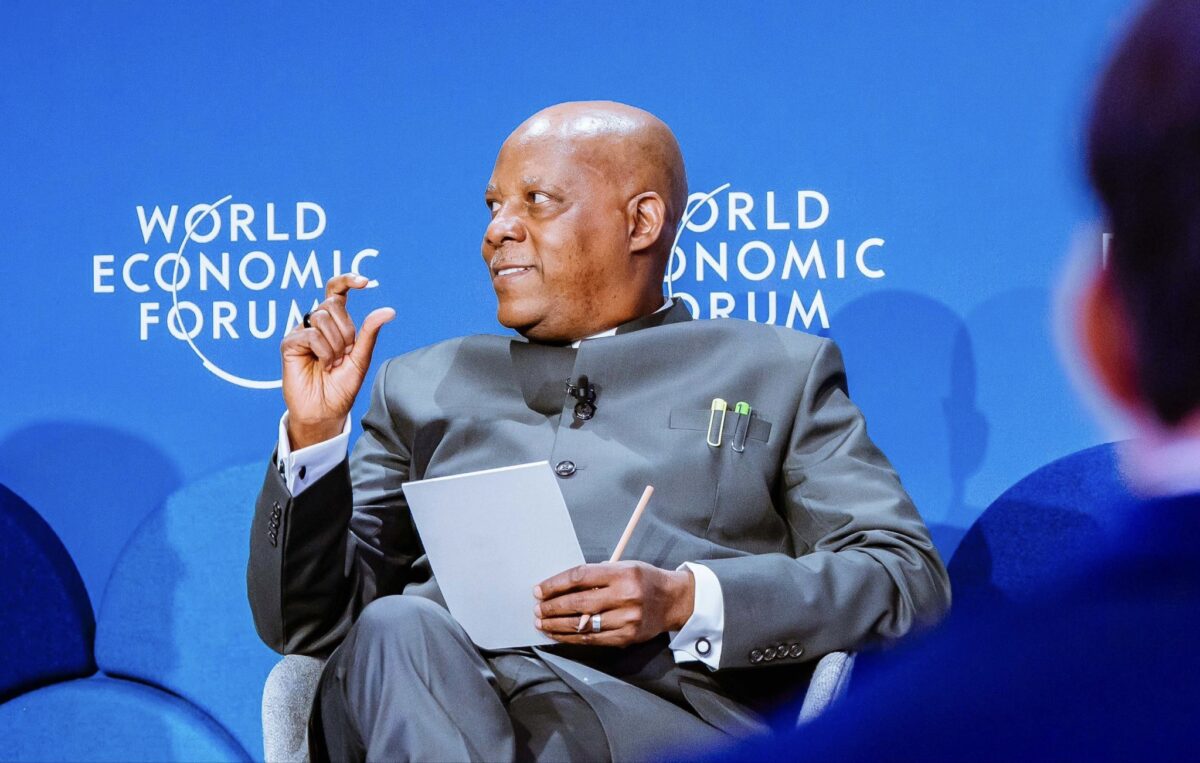
Nigeria has marked a historic first at the in Davos with the official unveiling of “Nigeria House,” a sovereign pavilion designed to reposition the country within global economic conversations.
Vice President , speaking at the 56th Annual Meeting of the forum, described the initiative as a signal of renewed seriousness in Nigeria’s engagement with the global economy.
Addressing participants at a high-level session titled “When Food Becomes Security,” the Vice President said the pavilion reflects a deliberate shift from passive participation to active leadership in global economic discourse.
“Nigeria House is a response to the lapses of the past. It reflects our intention and seriousness. Above all, it advertises our readiness to take a front-line seat in the global economy — not as observers, but as participants,” he said.
A Strategic Pivot at Davos
The opening of Nigeria House marks the first time the country has established a sovereign pavilion at the annual Davos gathering — a development officials say underscores a broader recalibration of Nigeria’s international economic posture.
Shettima said the platform would serve as a convergence point for policymakers, investors and development partners across sectors including trade, energy, infrastructure, technology, climate and culture.
While acknowledging that the pavilion was conceived as a whole-of-government initiative led by the Ministry of Industry, Trade and Investment, the Vice President stressed that its long-term success would depend on private sector participation.
“Government can open doors and create frameworks; only enterprise can translate policy into productivity,” he noted, urging investors to leverage the opportunities presented.
Reform Dividends Emerging
Shettima said Nigeria’s renewed global engagement coincides with what he described as early gains from ongoing economic reforms under President .
According to him, Nigeria’s economy expanded by approximately 3.9 per cent in 2025 — the fastest growth in over a decade — driven largely by a resilient non-oil sector accounting for about 96 per cent of GDP.
He said non-oil revenues now contribute nearly three-quarters of government collections, signalling a structural shift away from oil dependence. Inflation, which exceeded 30 per cent in late 2024, has eased significantly, while foreign reserves have reportedly risen above $45 billion alongside improved foreign exchange stability.
“These reforms were difficult but inevitable,” Shettima said, adding that Nigeria is now better positioned for sustained growth.
Food Security as National Security
Central to Nigeria’s presentation at Davos was a sweeping macro-strategy that places food security at the heart of national stability.
Shettima argued that food security can no longer be viewed narrowly as an agricultural matter but must be integrated into economic and security planning.
Nigeria’s strategy, he said, rests on three pillars:
- Increased domestic food production
- Environmental sustainability
- Regional integration within West Africa
Highlighting ecological diversity across the country, the Vice President noted that desertification and drought challenge parts of the Sahelian North, while flooding affects southern and North Central regions.
To address these vulnerabilities, the government is promoting drought-resistant and flood-tolerant crop varieties, including rice, sorghum and millet, while redesigning food systems in climate-prone areas.
He also acknowledged that insecurity in major food-producing regions remains a binding constraint. To tackle this, the government is establishing food security corridors and strengthening community-based protection frameworks to enable displaced farmers to return safely.
The “Back to the Farm Initiative,” he disclosed, aims to resettle farmers with inputs, insurance and access to capital.
On inflation, Shettima cited heavy import dependence on wheat, sugar and dairy as structural weaknesses contributing to price instability. The government’s response, he said, is to accelerate local production and promote substitutes such as cassava, sorghum and millet flour.
Continental Outlook
The Vice President also underscored the importance of intra-African trade under the African Continental Free Trade Area framework, describing regional cooperation as increasingly indispensable amid global supply-chain disruptions.
“Intra-African trade has become a necessity,” he said, expressing optimism that reform efforts under the administration’s economic agenda would unlock climate adaptation financing and expand cross-border trade beyond current levels.
Broad Government Presence
The unveiling event drew senior government officials, including the Minister of Industry, Trade and Investment, Dr Jumoke Oduwole, who described Nigeria House as evidence of renewed public-private collaboration and restored international confidence.
Officials from the ministries of solid minerals, science and technology, and foreign affairs were also present, alongside industry leaders and global investors.
The Bigger Picture
The launch of Nigeria House at Davos represents more than symbolic diplomacy. It signals an attempt by Africa’s largest economy to reposition itself at a time of shifting global supply chains, climate pressures and intensifying competition for capital.
Whether the platform translates into measurable investment inflows and sustained agricultural productivity will depend largely on policy consistency, security improvements and private sector confidence.
For now, the message from Davos is clear: Nigeria intends to re-enter the global economic stage with greater clarity of purpose.