
Why Nigerian Policies Fail: Lessons from Governance, Legislature, and Bureaucracy
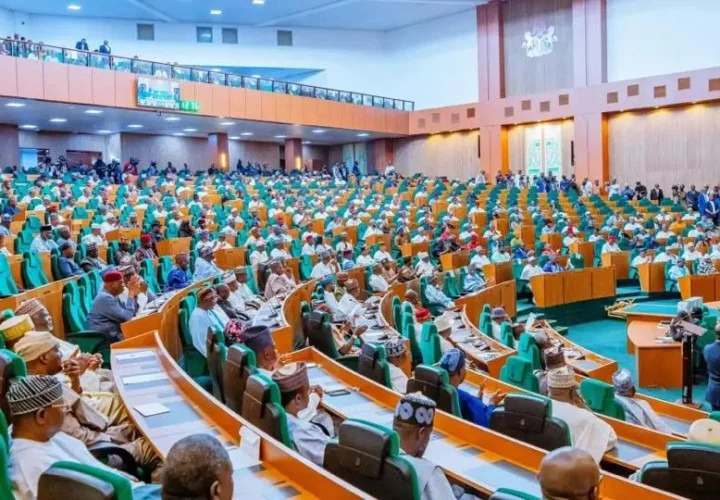
Nigeria’s persistent development challenges often invite public frustration. Each time the nation confronts a major issue — from power shortages to stalled reforms — citizens are quick to blame political leaders, only to see little corrective action. Yet, a deeper examination reveals that policy failures are rarely accidental; they are rooted in structural weaknesses spanning governance, the legislature, and the civil service.
1. Weak and Compromised Legislatures
Ambitious reforms in agriculture, education, health, and economic diversification frequently begin with fanfare but falter due to systemic legislative weaknesses. Budget padding remains a striking example: in 2025, lawmakers inserted nearly $4.7 billion worth of new projects — over 12% of the budget — distorting national priorities and diverting resources from core sectors like health and education.
The root cause often lies in how legislators are elected and their capacity to govern effectively. In many cases, political “godfathers” dominate party primaries, sponsoring candidates who then focus more on personal gain than public service. Many lawmakers, especially at local and state levels, enter office without prior professional experience or sufficient understanding of complex policy issues. Discussions on raising minimum qualifications for elective offices — including university degrees — have yet to yield meaningful change.
Instances abound where lawmakers vote on bills without even reading them. In 2022, a state assembly passed a controversial law with several members admitting they had not reviewed its content. Similar patterns persist, as illustrated in January 2023 when the Imo State House of Assembly voted against financial autonomy for its judiciary and legislature, undermining institutional independence.
This detachment from responsibilities leads to poorly conceived policies, insufficient oversight, and legislative capture by executive interests. Constituency projects, political inducements, and short-term populism often replace substantive engagement with citizens and experts.
2. Policy Design and Oversight Failures
Even well-intentioned reforms — such as subsidy adjustments, tax reforms, or diversification initiatives — falter due to oversight gaps. Legislators frequently prioritize political bargaining and personal enrichment over rigorous scrutiny, allowing executive overreach and poorly designed policies to persist. As a result, bills often fail to address citizens’ real needs, and implementation falters at the earliest stage.
3. Civil Service Inefficiencies and Corruption
Policy failure is compounded by systemic issues in the civil service. Bureaucratic inefficiency, ghost workers, delayed implementation, and nepotism undermine reforms. For example, free elementary education programs are sometimes sabotaged by school officials charging illegal fees, while health services intended to be accessible are monetized. Public servants and politicians often collude to divert resources, and whistleblowers risk retaliation.
Bureaucratic inertia also undermines reforms like the Oronsaye Report on agency rationalization, whose implementation remains incomplete despite renewed government focus. Similarly, the privatization of the power sector in 2013 failed due to capacity gaps, governance weaknesses, and poor oversight.
4. Historical and Structural Challenges
Nigeria’s policy failures are rooted in more than immediate governance issues. Colonial legacies, military rule, oil dependence, insecurity, weak institutions, and underinvestment in human capital create a complex ecosystem where reforms struggle to take hold. Global shocks and poor alignment between policy design and implementation further exacerbate the problem.
5. Solutions for Effective Policymaking
Addressing these challenges requires a holistic approach:
- Electoral Credibility and Standards: Raise qualification requirements for legislative offices and ensure transparent primaries and public scrutiny of candidates’ records.
- Empowered Civil Society: Support independent, well-funded CSOs to educate citizens, monitor implementation, and advocate accountability — including contributions from the diaspora.
- Institutional Strengthening: Enforce anti-corruption laws rigorously, protect whistleblowers, digitize processes, and ensure continuity in development frameworks beyond regime changes. Reforms like Oronsaye’s recommendations must be fully implemented.
- Inclusive, Evidence-Driven Governance: Policies must prioritize national interest over personal or sectional gains, with genuine stakeholder engagement from formulation to evaluation.
Conclusion
Nigeria’s development trajectory can change only when citizens demand better representation, institutions operate transparently, and leaders are held accountable at every level. The normalization of failure must end. With a combination of political will, institutional reforms, and informed citizen engagement, Nigeria can transform challenges into opportunities and build sustainable policies that deliver for all.