
Islamist Militancy Intensifies Across Benin, Niger and Nigeria Borderlands, ACLED Reports
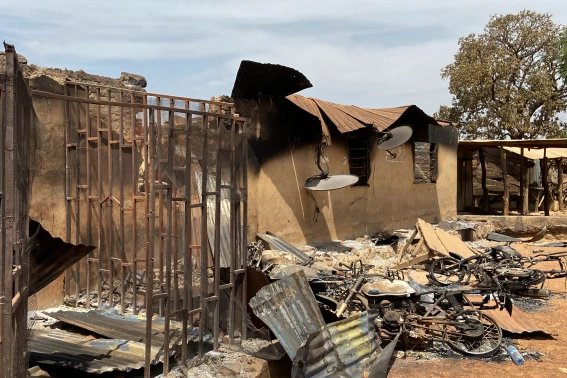
Dakar/Abuja — Islamist militant groups have significantly escalated their operations in the border regions of Benin, Niger and Nigeria over the past year, with violent incidents and fatalities surging markedly, according to a new analysis by the Armed Conflict Location & Event Data Project (ACLED).
The data, covering developments from 2024 to 2025, indicate that violent events involving jihadist organisations in the tri-border zone increased by approximately 80 per cent, while associated deaths more than tripled to over 1,000 across the region.
Expansion of Militant Presence
ACLED’s report highlights how Islamist groups — notably Jama’at Nusrat al-Islam wal-Muslimin (JNIM), linked to al-Qaida, and the Islamic State Sahel Province (ISSP) — have moved beyond entrenched Sahelian theatres such as Mali and Burkina Faso to establish a deeper footprint in coastal West Africa.
This shift reflects a transition from sporadic incursions to more sustained and lethal operations, exploiting porous borders, governance gaps and weak regional military coordination in frontier areas, according to ACLED analysts.
In Benin, cross-border raids against security forces and civilian targets made 2025 the deadliest year on record, with militant activity extending into the Alibori and Borgou departments. Similarly, in Niger, jihadist factions have reinforced their presence and carried out operations near strategic locations, including an assault on a Niamey military airbase.
Implications for Nigeria’s Security Landscape
For Nigeria, the growing activity along the borders with Benin and Niger compounds an already complex security environment. In addition to longstanding insurgencies in the northeast, jihadist cells and allied criminal networks have been increasingly active in northwest and central states, including Sokoto, Kebbi, Niger and Kwara.
ACLED notes that jihadist groups have publicly claimed attacks in border communities, signalling not only operational expansion but also a strategic effort to assert influence and recruit locally.
The U.S. and Nigerian security collaboration, which in late 2025 included targeted air operations against Islamic State affiliates and deployment of advisory personnel, underscores the international dimension of the counter-extremism response. However, analysts warn that tactical engagements alone may be insufficient without broader, sustained efforts to strengthen governance, border security and regional cooperation.
Regional Security Architecture Under Strain
The spread of jihadist activity across West Africa reflects broader systemic vulnerabilities. Military coups in Mali, Burkina Faso and Niger have weakened traditional security alliances and impeded effective intelligence sharing, complicating joint counter-terrorism operations. In Benin, persistent insecurity was cited as a catalyst for a failed coup attempt in late 2025, illustrating how militant threats are reshaping political dynamics across the region.