
Amb. Enikanolaiye and the Strategic Autonomy of the Renewed Hope Agenda
Why Nigeria must stop choosing sides and start choosing its interests
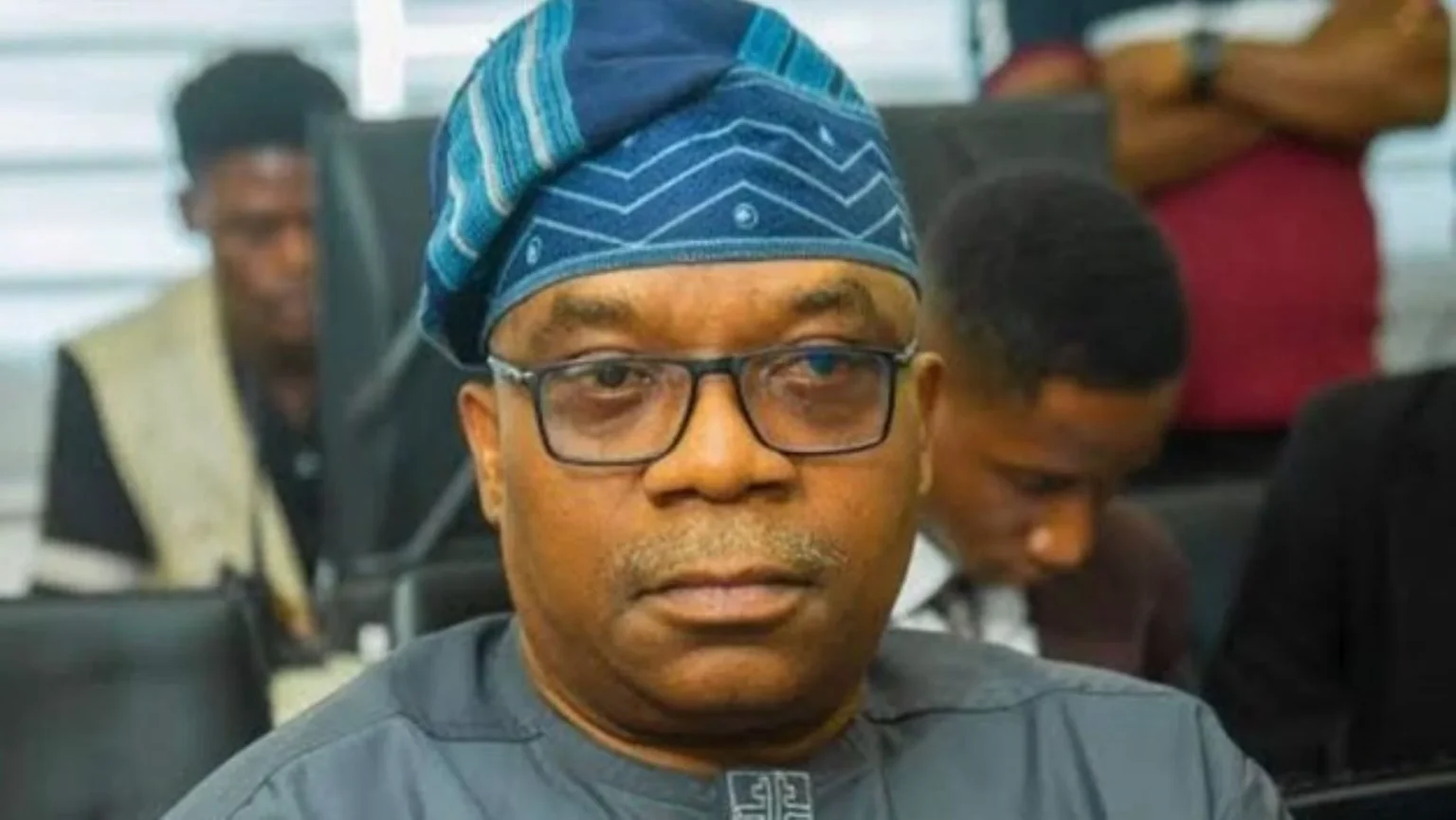
By J.O. Abel-Ontop
There is a useful way to understand the emerging foreign policy thinking of the Tinubu administration: Nigeria is beginning to ask a question it should have asked much earlier—what exactly does the country gain from its place in the international system?
For decades, Nigeria has been a generous contributor to Africa’s political and diplomatic causes. It has committed troops, resources, diplomatic capital and political influence to the preservation of peace and the advancement of African unity. It has played the role expected of a continental giant.
But there is a point at which leadership becomes expensive if the leader’s own house is struggling.
This is where the intervention of Ambassador Audu-Rafiu Olusola Enikanolaiye, Minister of State for Foreign Affairs, becomes significant.
In his recent intervention on Nigeria’s foreign policy, the Minister advances the idea of strategic autonomy as an essential doctrine for a country operating in an increasingly multipolar world. His argument is neither that Nigeria should withdraw from global affairs nor that it should abandon its traditional commitment to Africa.
It is that Nigeria must have the freedom to decide for itself.
That may sound obvious. In practice, it is a profound proposition.
The end of foreign policy by reflex
Nigeria’s foreign policy has historically been shaped by a strong Afrocentric tradition. That tradition served the country well in many respects. Nigeria’s role in the liberation of Southern Africa, peacekeeping operations and regional diplomacy established its credentials as a responsible continental power.
But the international environment that produced that foreign policy has changed.
The Cold War is over. The global economy is more interconnected. China has emerged as a formidable economic and technological power. The United States remains a dominant military and economic force. Europe retains significant economic influence. India, the Gulf states, Brazil and other emerging powers are expanding their strategic reach.
At the same time, the rules governing trade, technology, energy, critical minerals, artificial intelligence and security are becoming increasingly geopolitical.
The world is no longer organised around a simple contest between two superpowers.
It is multipolar, competitive and transactional.
Nigeria therefore needs a foreign policy that is equally sophisticated.
This is the context in which Enikanolaiye’s strategic autonomy argument should be understood.
The question is no longer whether Nigeria is aligned with this country or that power.
The question should be: What serves Nigeria’s national interest?
Strategic autonomy is not isolation
There is a danger that the phrase “Nigeria First” could be misunderstood.
Putting Nigeria first does not mean putting Nigeria alone.
Strategic autonomy is not isolationism. It is not hostility towards the West. It is not an invitation to abandon China. It is not a declaration of neutrality on every international question.
Rather, it is the ability to maintain relationships with competing centres of power without allowing any of them to determine Nigeria’s strategic choices.
This distinction is crucial.
Nigeria should be able to cooperate with China on infrastructure and technology, deepen relations with the United States on security and investment, work with Europe on trade and development, engage India on pharmaceuticals and technology, attract capital from the Gulf and simultaneously strengthen its African partnerships.
There is no contradiction in this.
Indeed, there is wisdom in it.
A country with Nigeria’s population, market size, natural resources and geopolitical importance should have enough confidence to engage everyone without becoming captive to anyone.
That is the essence of strategic autonomy.
From Afrocentrism to a more pragmatic Nigeria First
Enikanolaiye’s position also represents an important evolution in the debate over Nigeria’s traditional Afrocentric foreign policy.
Africa remains central to Nigeria’s foreign policy. There is no credible argument for abandoning that responsibility.
But Nigeria cannot continue to define its international role primarily by what it does for Africa while paying insufficient attention to what international engagement does for Nigerians.
The Minister has previously argued that Nigeria must be located at the centre of its foreign policy preoccupations, with national security, defence and economic prosperity serving as core considerations.
That is not an abandonment of African leadership.
It is a reprioritisation of national interest within African leadership.
And there is an important distinction.
A stronger Nigeria will be a more influential African power.
A weaker Nigeria cannot indefinitely finance continental leadership from diminishing domestic capacity.
If Nigeria wants to remain Africa’s diplomatic heavyweight, it must first strengthen the foundations of that influence at home.
Diplomacy must now pay dividends
This is perhaps where the strategic autonomy doctrine becomes most relevant to ordinary Nigerians.
For too long, foreign policy has been discussed largely in the language of communiqués, state visits, bilateral agreements and international conferences.
But the average Nigerian is more likely to ask a different question:
What has all this diplomacy done for me?
Has it created jobs?
Has it opened markets for Nigerian businesses?
Has it attracted productive investment?
Has it transferred technology?
Has it strengthened Nigeria’s security?
Has it protected Nigerians living abroad?
Has it expanded educational opportunities?
Has it improved the country’s capacity to produce rather than merely consume?
These are not anti-diplomatic questions.
They are precisely the questions a modern foreign policy ought to answer.
This is why the economic component of Enikanolaiye’s thinking deserves serious attention.
Nigeria needs a diplomatic service that does not merely facilitate political relationships but actively supports trade, investment, technology acquisition, industrialisation and access to global markets.
The Nigerian embassy of the future must increasingly be a gateway for Nigerian exporters, entrepreneurs, researchers, investors and innovators.
Diplomats should be looking for markets as aggressively as they look for political partnerships.
The 4Ds: diplomacy with a human face
The strategic autonomy argument sits comfortably within the administration’s broader 4D foreign policy framework: Demography, Development, Democracy and Diaspora.
The framework is important because it attempts to move foreign policy away from the abstraction of states and towards the practical realities of people.
Nigeria’s demography is an enormous strategic asset.
Its development needs are enormous.
Its democratic identity gives it a platform to advocate for constitutional governance and responsible leadership.
And its diaspora represents a reservoir of capital, expertise, technology, networks and global influence.
The diaspora alone illustrates how Nigeria’s foreign policy can be reimagined.
Millions of Nigerians live, work and study outside the country. They are not simply people who send money home.
They are doctors, engineers, academics, entrepreneurs, technology specialists, investors, scientists and professionals who possess networks that Nigeria can leverage.
The objective should therefore not merely be to celebrate remittances.
It should be to create conditions under which Nigerian talent abroad becomes part of Nigeria’s development ecosystem.
That is strategic thinking.
Nigeria’s greatest diplomatic asset may be its market
There is another element of strategic autonomy that Nigeria cannot afford to ignore: economic size.
Nigeria is not a minor state seeking relevance.
It is one of the world’s most populous countries, possesses enormous human capital and natural resources, and sits at a strategic point in Africa’s economic geography.
Yet population without productivity is not power.
Natural resources without value addition are not autonomy.
A large consumer market that depends heavily on imported goods does not provide the bargaining power that its size suggests.
This is where foreign policy must intersect with domestic economic policy.
Nigeria cannot achieve genuine strategic autonomy while importing most of what it needs to survive.
The country needs stronger productive capacity in agriculture, manufacturing, energy, technology, pharmaceuticals and critical infrastructure.
It must also become more competitive in exporting finished goods and services.
Strategic autonomy, therefore, is not something the Ministry of Foreign Affairs can achieve alone.
The Ministry can negotiate the partnerships. The Nigerian economy must create the capacity to benefit from them.
Technology will determine tomorrow’s sovereignty
There is perhaps no area in which strategic autonomy is more urgent than technology.
The next generation of geopolitical competition will not be determined solely by military hardware or oil reserves.
It will be fought over artificial intelligence, semiconductors, data, telecommunications, cyber capabilities, digital infrastructure, biotechnology and advanced manufacturing.
A country that depends entirely on external technology for critical systems may be politically independent but strategically vulnerable.
Nigeria therefore needs international partnerships that do more than deliver finished technology.
It needs partnerships that build Nigerian capabilities.
Technology transfer, research collaboration, local skills development and investment in Nigerian innovation should become important measures of diplomatic success.
Nigeria should not merely ask foreign partners, “What can you give us?”
It should increasingly ask, “What can we build together—and what capacity will remain with Nigeria when the partnership ends?”
That is the harder and more consequential question.
The Africa question remains
Some may interpret the “Nigeria First” approach as a retreat from Africa.
That would be a mistake.
Nigeria cannot relocate geographically. Its security, economy and future are deeply connected to those of its neighbours and the wider African continent.
Terrorism does not respect borders.
Neither does organised crime, illegal migration, arms trafficking, infectious disease or climate-related insecurity.
Nigeria’s economic future is also tied to African integration, particularly through the African Continental Free Trade Area.
The right approach is therefore not Nigeria versus Africa.
It is Nigeria within Africa, but with a clearly defined national interest.
Nigeria can remain committed to ECOWAS and the African Union while demanding that regional commitments also serve Nigerian economic and security interests.
That is not selfishness.
It is responsible statecraft.
A doctrine will be tested by implementation
This is where the real challenge begins.
Strategic autonomy is an attractive doctrine. But it cannot survive on speeches and policy papers.
A country cannot exercise meaningful strategic autonomy if its economy is weak, its electricity supply is unreliable, its industries are uncompetitive and its infrastructure is inadequate.
Diplomatic independence ultimately rests on domestic capacity.
A country that needs everything from others has fewer choices when negotiating with them.
A country that can produce, export, innovate, defend itself and attract investment on competitive terms has considerably greater freedom.
Therefore, Enikanolaiye’s foreign policy proposition should be read not simply as a diplomatic doctrine but as a challenge to Nigeria’s entire development establishment.
Strategic autonomy begins at home.
The Ministry of Foreign Affairs can open doors, negotiate agreements and cultivate partnerships. But the ministries responsible for finance, industry, agriculture, energy, education, science and technology must ensure that Nigeria has something competitive to offer once those doors are opened.
The real meaning of Nigeria First
There is ultimately a difference between nationalism and strategic confidence.
A country can be loudly nationalistic and still remain economically dependent.
Conversely, a confident country does not need to reject the world. It engages the world from a position of clarity.
That is the opportunity presented by the Enikanolaiye doctrine.
Nigeria does not have to choose between China and the West.
It does not have to choose between Africa and the wider world.
It does not have to choose between development and sovereignty.
It needs the strategic maturity to pursue all of them according to its own interests.
The country’s diplomatic posture should therefore be neither anti-Western nor pro-Western, neither pro-Chinese nor anti-Chinese.
It should be pro-Nigeria.
That is what strategic autonomy should mean.
The Enikanolaiye test
Ambassador Enikanolaiye’s greatest challenge is that the doctrine he is helping to articulate will be judged by outcomes.
If Nigeria attracts billions of dollars in investment but gains little local value, strategic autonomy will be questioned.
If foreign partnerships create markets, jobs, technology and industrial capacity, the doctrine will acquire credibility.
If Nigerian citizens abroad receive stronger protection and meaningful opportunities to contribute to national development, the 4D framework will become more than a policy slogan.
If Nigeria’s diplomatic engagements consistently produce measurable improvements in security, trade, investment and national influence, then the country’s foreign policy will have undergone a genuine transformation.
This is why the Minister’s intervention deserves to be taken seriously.
He is not merely arguing for a new vocabulary for Nigerian diplomacy.
He is making a larger proposition about the kind of country Nigeria must become if it wants to exercise genuine sovereignty in the 21st century.
The world is changing too rapidly for Nigeria to remain trapped in the diplomatic habits of another era.
The country must remain African.
It must remain globally engaged.
But above all, it must become strategically confident enough to determine its own choices.
That is the promise of strategic autonomy.
And perhaps the most important lesson of the Enikanolaiye doctrine is this:
Nigeria does not need to withdraw from the world to assert itself. It needs to enter the world with enough strength, clarity and confidence to negotiate on its own terms.
That is the foreign policy challenge of the Renewed Hope Agenda.
And it may well become one of its most consequential tests.